On Seiu Ito And The Origins Of Kinbaku
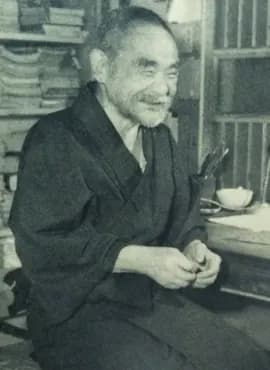
Seiu Ito is a central figure in the history of kinbaku and shibari as we know them. Today, on his birthday, we celebrate International Kinbaku Day and pay tribute to his life, inspiration and vision.
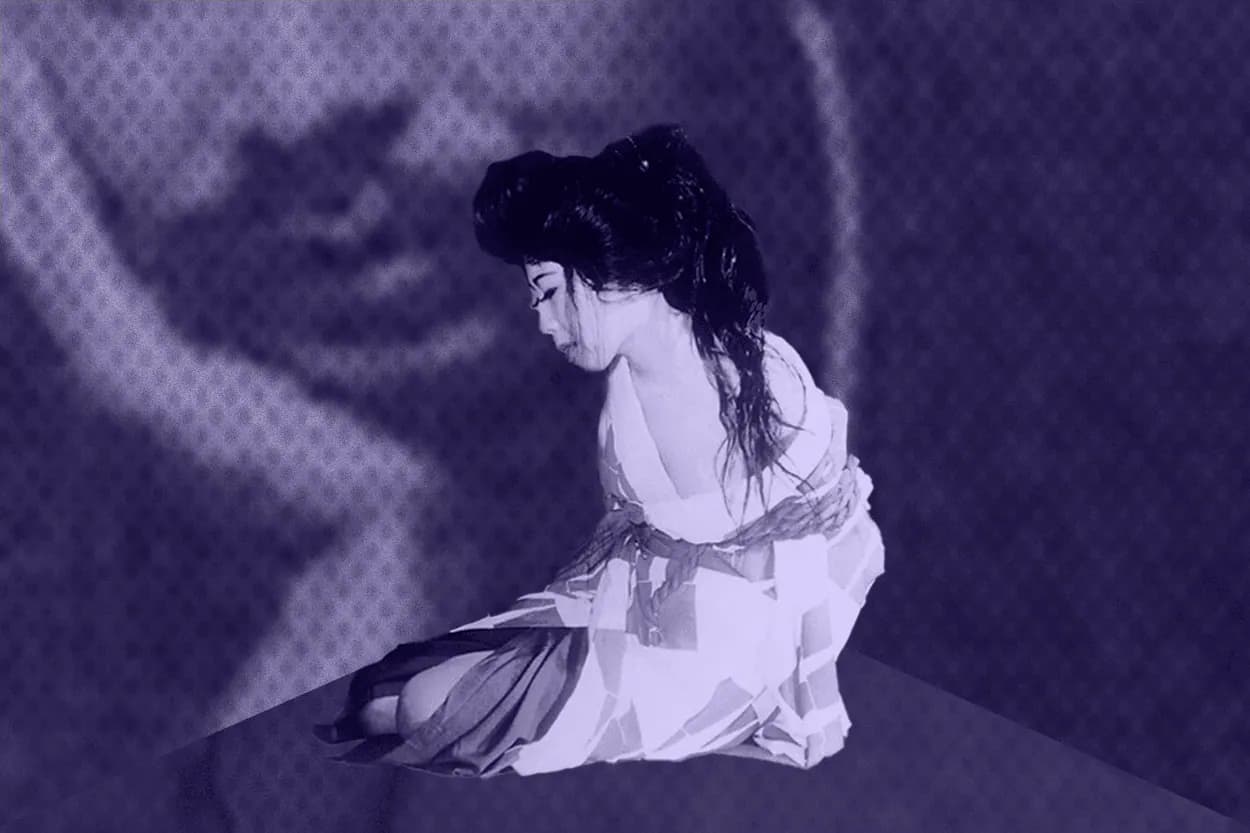
What is kinbaku? Where did it come from? And is tying people up de facto shibari? While an interest in captivity and bondage isn’t inherent to Japanese kinksters only, the use of rope for binding and torture do arrive from a specific cultural context – one separated from the metal refinement and production of the West (you might notice, for instance, analogous Western kinks more often feature cuffs and chains).
The origins of Japanese rope bondage specifically are often discussed and debated among practitioners and enthusiasts; some claim shibari is an “ancient art” rooted in the martial bindings of hojojutsu and even earlier rope usage in Japanese culture, while others prefer to center the work of SM magazines and sex workers in the postwar era as the starting point for shibari as we know it today. The truth lands somewhere in the compromise of these stories – one of the notable challenges in answering these questions definitively is how much of shibari history is found in oral tradition. With that said, one thing that most seem to agree on is the role that artist Seiu Ito played in history as the “father of modern kinbaku”.
Born on 3 March 1882, Seiu Ito is most remembered for his ukiyo-e woodblock prints depicting women in torturous scenarios (often including rope bondage). He also produced paintings and photographs, some of the earliest we have of modern-era Japanese rope bondage, and wrote prolifically on the topics of torture and eroticism, publishing erotica throughout his lifetime. Besides producing iconic images depicting the “beauty of suffering” that inspired many future shibari artists, his public reputation as an artist interested in domination and SM also drew likeminded others to him, many who would go on to become kinbaku masters in their own time.
Seiu Ito’s early life
The eldest son of a metal engraver, he was at eight years old when he was accepted as an apprentice to Teiu Nozawa, a member of the Edo-based Korin school of drawing. Ito was obsessed with captivity and torture from a very early age – his fascination drew him magnetically to the theater early in life, where these storylines were prominent and sometimes romanticized in plays like Maneku Furisode (‘An Inviting Kimono Sleeve’), Nisshin Senso Youchi no Ada Tan (‘Raid Nocturne During the Nishiin War’), and Akumabarai (‘Sweep Away the Demons’). By the age of 14, he was drawing advertisements for theater plays.
The details of his adolescence are filled with changes in career and location; apprenticing for an ivory carver, then quitting to pursue painting, moving to Kyoto, and then back to Tokyo. He was married through an arranged meeting to the younger sister of painter Terunobu Tamaki’s wife, and was employed in Tokyo as an artist, journalist, and theater critic, making much of his income from commissions and illustrations.
Seiu Ito’s first bondage explorations
By many accounts, it is his relationships with his models that launched his serious exploration of torture and creating torture images. At 34 years old, he started a two-year relationship with model Kaneyo Sasaki, and began depicting images of torture. At 37, he divorced his wife and married model Kise Sahara, who became central to the history of kinbaku, appearing in some of the earliest bondage suspension photography that exists today.
Seiu Ito continued to tie and photograph women, and as he gained notoriety for works of art and literature, he also gained a reputation as a pervert.
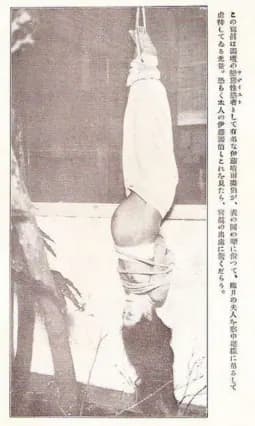
Seiu Ito continued to tie and photograph women, and as he gained notoriety for works of art and literature, he also gained a reputation as a pervert. He held sessions where women were tied, and photographed, drawn, or painted by attendees. He was divorced and then married for a third time. His art came under heavy censorship by the Japanese government in the 1920s and ’30s, and in 1944 his home was destroyed in the Tokyo Air Raids, many of his life’s works destroyed with it.
Post-war contributions to the golden era of kinbaku
After the Second World War, Japan underwent a period of Westernization, and kinbaku experienced a golden era thanks to changes in censorship and the emergence of BSDM magazines. (This is a time period of great interest to kinbaku and shibari historians and has been covered in detail by Midori here: The History & Myths of Japanese Bondage.)
Seiu Ito, now in his 70s, was an elder in a growing community of bondage and torture enthusiasts and workers. He published erotica and contributed to a variety of magazines. He edited a photo series of kinbaku images that appeared in a magazine titled Yorikiri Romance (pre-dating the first SM photos in the now-infamous kinbaku magazine Kitan Club). Members of his circle, like Minomura Kou, went on to shape the content of SM magazines and kinbaku content in the ’50s, and Seiu Ito’s strong preferences for tensioned firm binding (rather than practically loose staged rope) founded the basis of the type of rope bondage that is seen most commonly in Japanese styles today.
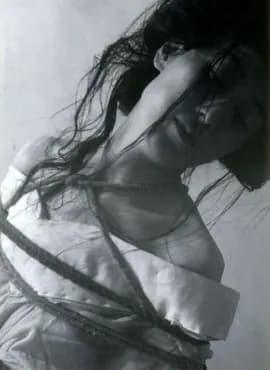
In 1960, Seiu Ito received a prize from the Federation of Fine Art Publishers. In 1961, Seiu Ito died at age 79.
Seiu Ito’s lasting influence
It is both Seiu Ito’s early artistic works, and his later participation in the emerging post-war kinbaku community that have earned him the title and iconic status of being the “father of kinbaku” as we know it today. His stylistic interest in recreating Edo-era woodblock prints has contributed to the perception of kinbaku as an older art than it is, and his own writings on seme (most easily translated as “torture”) and on kinbaku gave us much of the vocabulary that we use when talking about Japanese-style rope bondage today.
Much of our understanding of his life is from the few works that have survived the twists and turns of time, and from the stories and shared history of his friends after his death, many of whom were or became notable in the annals of shibari history themselves.
On the challenges of oral history
Students studying at rope studios around the world learn primarily from the oral lectures of teachers in those spaces. And many spaces only teach the rope itself – where to place it, how to bind, suspend, untie. There is no current unified textbook or shared agreement on the origins and influences of shibari, only an understanding that this art/craft/kink is (and has always been) shaped primarily by the people practicing it.
There is no current unified textbook or shared agreement on the origins and influences of shibari, only an understanding that this art/craft/kink is (and has always been) shaped primarily by the people practicing it.
Today, most of the history we have comes in the form of personal anecdotes shared thirdhand over drinks, grudges and relationships judged with the distance of time and with the joyful enthusiasm of gossiping, and often from outside of the cultural context in which they happened. Some dedicated practitioners compile and translate and try to piece together what’s missing from artifacts – many of which were destroyed in the passing of time, wars, and disasters. We get different versions based on the elders that we hear from and have access to. We try to piece these things together for a sense of truth. We debate on internet forums, and sleuth like detectives through the same limited set of source materials.
With that in mind, the endeavor of writing any definitive answer to “where did kinbaku come from?” comes with the heavy baggage of potentially getting it wrong – missing the details, presenting a myth as fact, listening to unreliable narrators. And for that reason, putting stories like this in writing, becomes both vulnerable and high-risk, and also feels like one of the ways that we maintain this thread, connecting the firsthand knowledge and accounts while we still have them with the future practitioners of tomorrow’s kinbaku.
I close with incredible gratitude to the contributions of modern-day kinbaku hobbyists and historians. And with an invitation to continue to comment, disagree, discuss, contribute, and to more fully complete the picture of the past that I’ve pieced together here.
And happy birthday to Seiu Ito, the Father of Kinbaku.
This piece was initially published in March 2025, and has been updated by our team.
Sources:
- https://picryl.com/collections/seiu-ito-18821961-cc87ee
- https://spectrumboutique.com/journal/article/the-history-myths-of-japanese-bondage/
- https://nawapedia.net/index.php?title=Seiu_Ito
- https://kokoro-kinbaku.com/2016/10/20/itoh-seiu-fifteen-ways-to-tie-a-womans-body-1953/
- https://www.fujiarts.com/shunga-japanese-prints/ito-seiu/303900-sketches-of-hell-in-edo
- https://cvltnation.com/seiu-ito-father-japanese-bondage-art/
- https://www.kinbakutoday.com/kise-sahara-the-first-sm-model-in-japan/
- Master K’s The Beauty of Kinbaku (2015)