What You Don’t See: Getting Real About Bodies In Rope
We all look, feel and move differently in bondage. Five rope bottoms share the unseen “limitations” that shape their practice and how they’ve learned to love their bodies in rope.
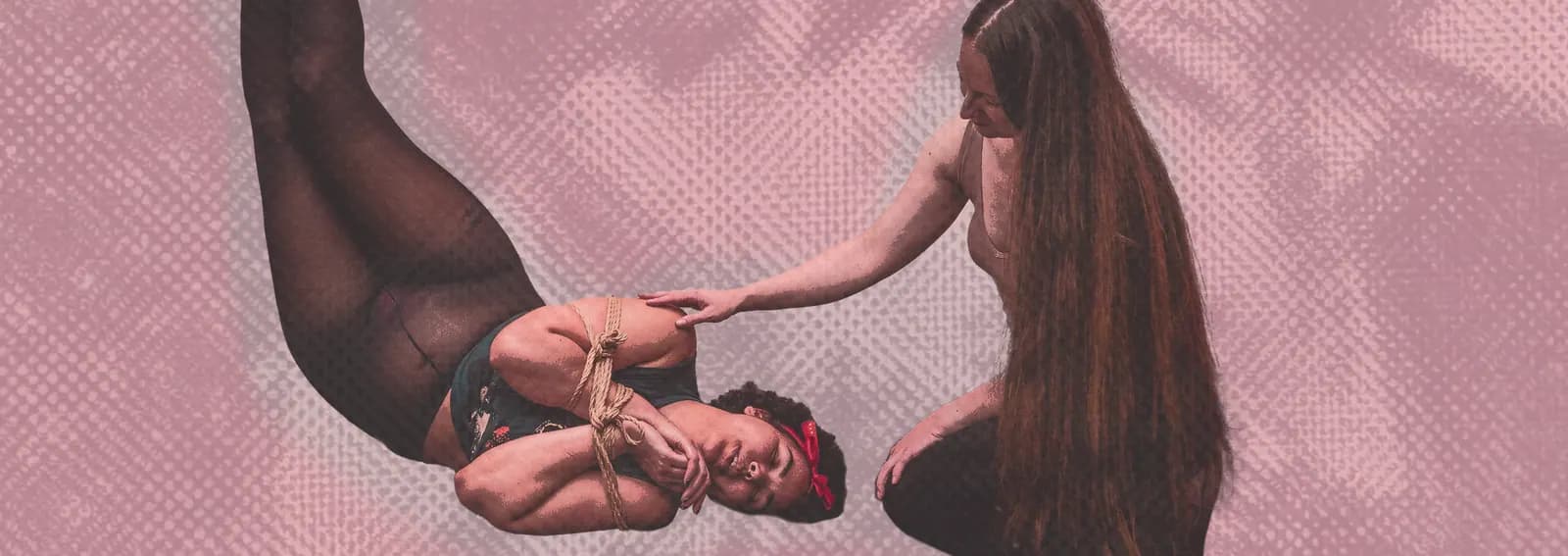
I’ve had many conversations with rope bottoms who share something I know all too well: those quiet, uncomfortable moments of insecurity, comparison, and self-judgment. What surprised me most was how universal these feelings are – regardless of experience level, body type, age, or relationship with rope. And honestly? Many of us still judge ourselves far more harshly than anyone else does.
Social media doesn’t help. We scroll through polished, curated snapshots of people in rope looking serene, bendy, strong, or effortlessly graceful. It’s natural to fill in the blanks and assume everyone else is coping better, enduring more, or doing things we “should” be able to do. I’ve even had bottoms tell me they can’t do things like I can, thinking that I can do everything with ease.
The truth? I absolutely can’t.
Like every rope bottom I know, I have limitations, injuries, boundaries, and things my body simply does not do. It took me years (and a lot of ongoing learning) to accept that none of this makes me less of a rope bottom, and it definitely doesn’t make me less deserving of joy, exploration, or connection.
For me, the most important part of shibari has never been about performing strength or endurance. It has been about exploring and knowing yourself and your body, or at least staying committed to the journey of figuring it out. It’s about finding people who will adapt with you, help you explore, or avoid what doesn’t work for you. Rope is supposed to be collaborative. It’s supposed to be personal. And it should never require you to ignore the body you actually have.
Rope is supposed to be collaborative. It’s supposed to be personal. And it should never require you to ignore the body you actually have.
So, to help normalise these conversations, here are some of the factors I have to plan scenes around, and the “unseen” experiences of other rope bottoms; the kind of things you don’t catch in a pretty suspension photo but which absolutely shape scenes, ties, and decision-making.
My limitations (and why they don’t make me less)
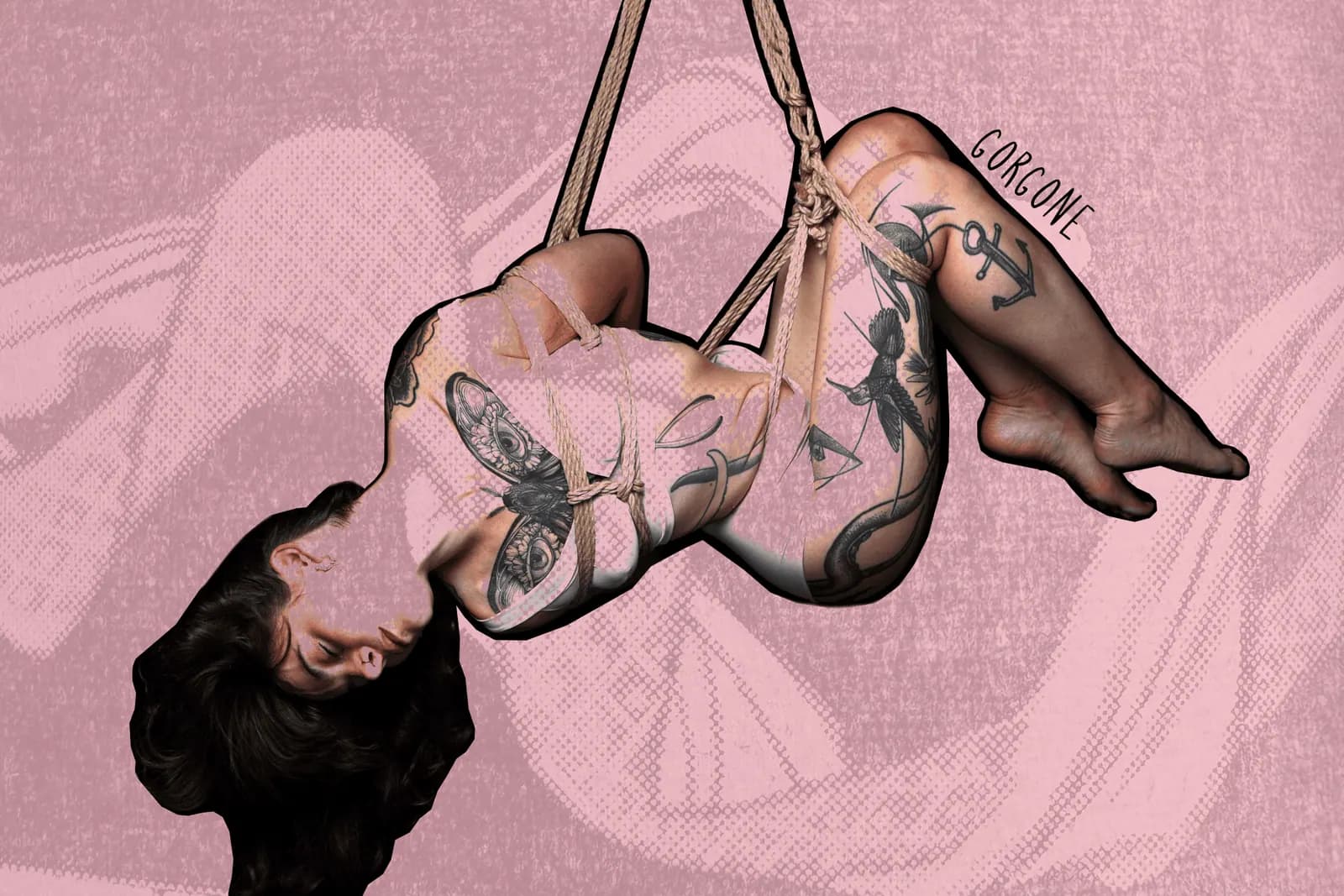
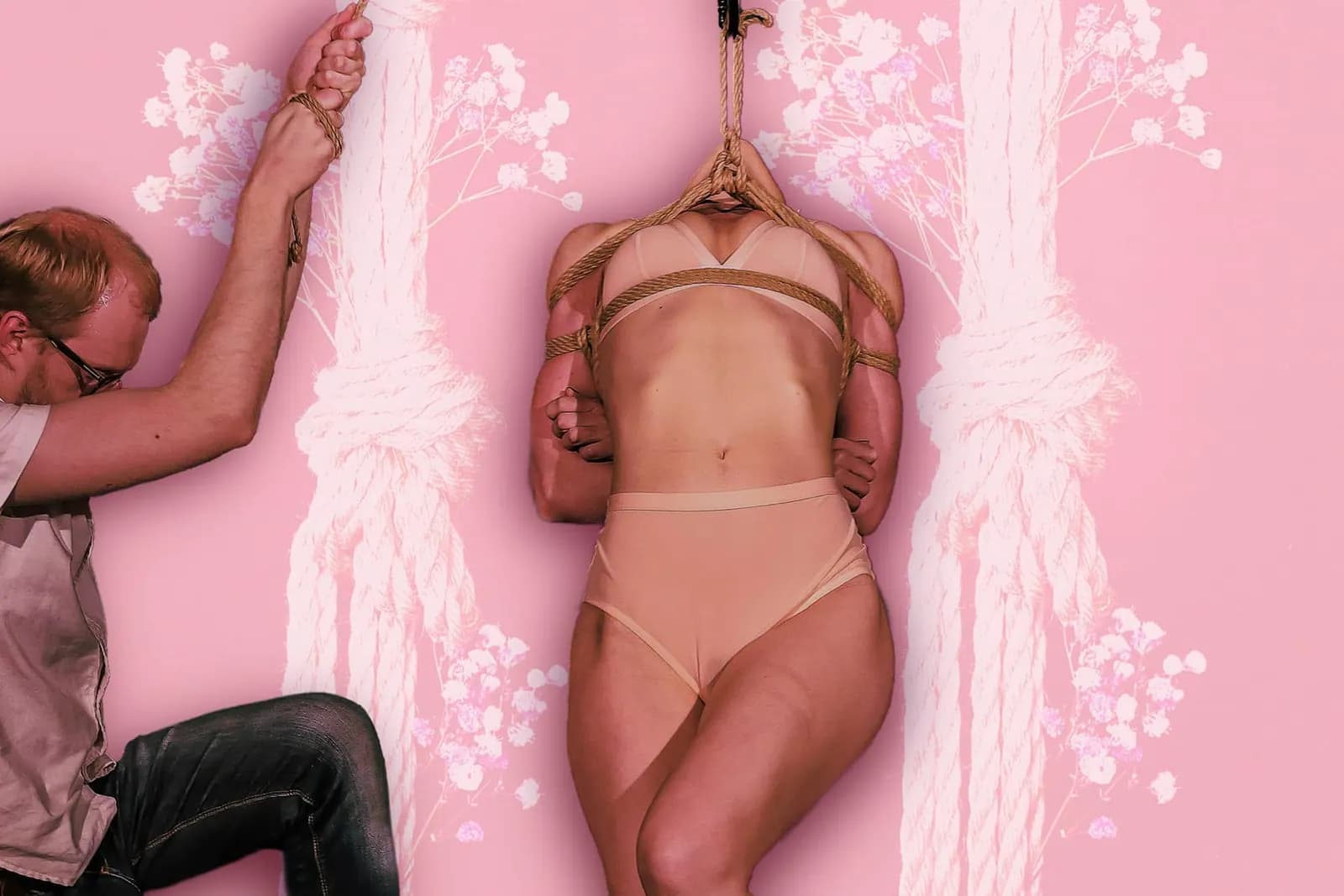
In the suspension photo I’ve included, you see the pose, but not the realities of my personal constraints and the story behind them…
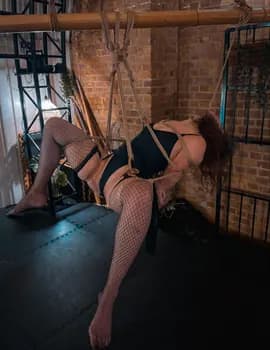
Rigger: @_Takotsubo
I have extremely sensitive nerves, which means my TK wrap placements have to be exact. It took years of trial and error with a consistent partner to figure out what keeps me safe. My shoulders are unstable from hypermobility and injury, so my arms must be positioned in a particular way. Added to that, I require ongoing osteopathy to help my body to find TKs sustainable at all.
I also have deep hip sockets, which means my legs don’t open wide. Without opening my leg in a circular motion (following the joint rotation), they won’t open at all. My hips have been pushed to their absolute max in this picture. Sometimes this requires me to ask the rigger to reopen my leg several times before it is fully opened or sustainable.
Another thing which this picture shows well is that I have a long, quite weak neck. Unsupported, head-tilted-back positions can hurt my neck and quickly drain my ability to lift my head. I often avoid them entirely or ask for support, like hair rope, or – as seen here – leaning into an upline.
But here’s the thing: none of this is a problem for me. There is no expectation, from me or from any rigger I tie with that I should be able to do things my body isn’t suited for. Everything I’ve listed can be worked around or adapted to. That is the entire point of rope: working with the body you have, not the one you imagine you’re supposed to have.
None of this is a problem for me. There is no expectation, from me or from any rigger I tie with that I should be able to do things my body isn’t suited for.
We all have things we can’t do, don’t want to do, or don’t enjoy. None of us are less because of it. Taking the time to know yourself, and working with people who respect that, is what helps you discover what brings you the most joy.
Experiences of other rope bottoms
One of the most powerful reminders that none of us are alone in this comes from hearing the realities of other rope bottoms. We all have those “unspoken” parts of rope; the stuff you don’t see in photos, the things you quietly work around, or the insecurities that never make it into a caption.
Here are four rope bottoms sharing their own “unseen” limitations, and what you don’t see on social media.
“I am enough” – Tangled Magnolia
Tangled Magnolia has been tying on and off for longer than they want to admit, with the last decade spent attending events and workshops. They’re a switch, but most of their experience and their confidence comes from bottoming.
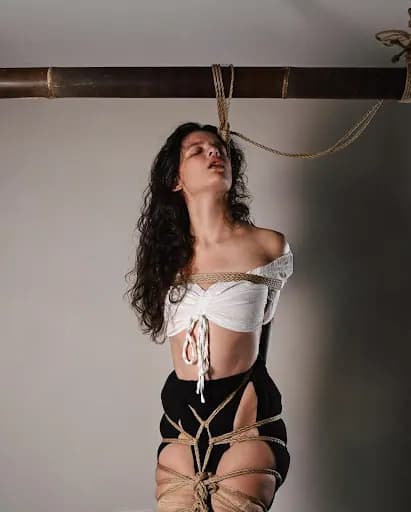
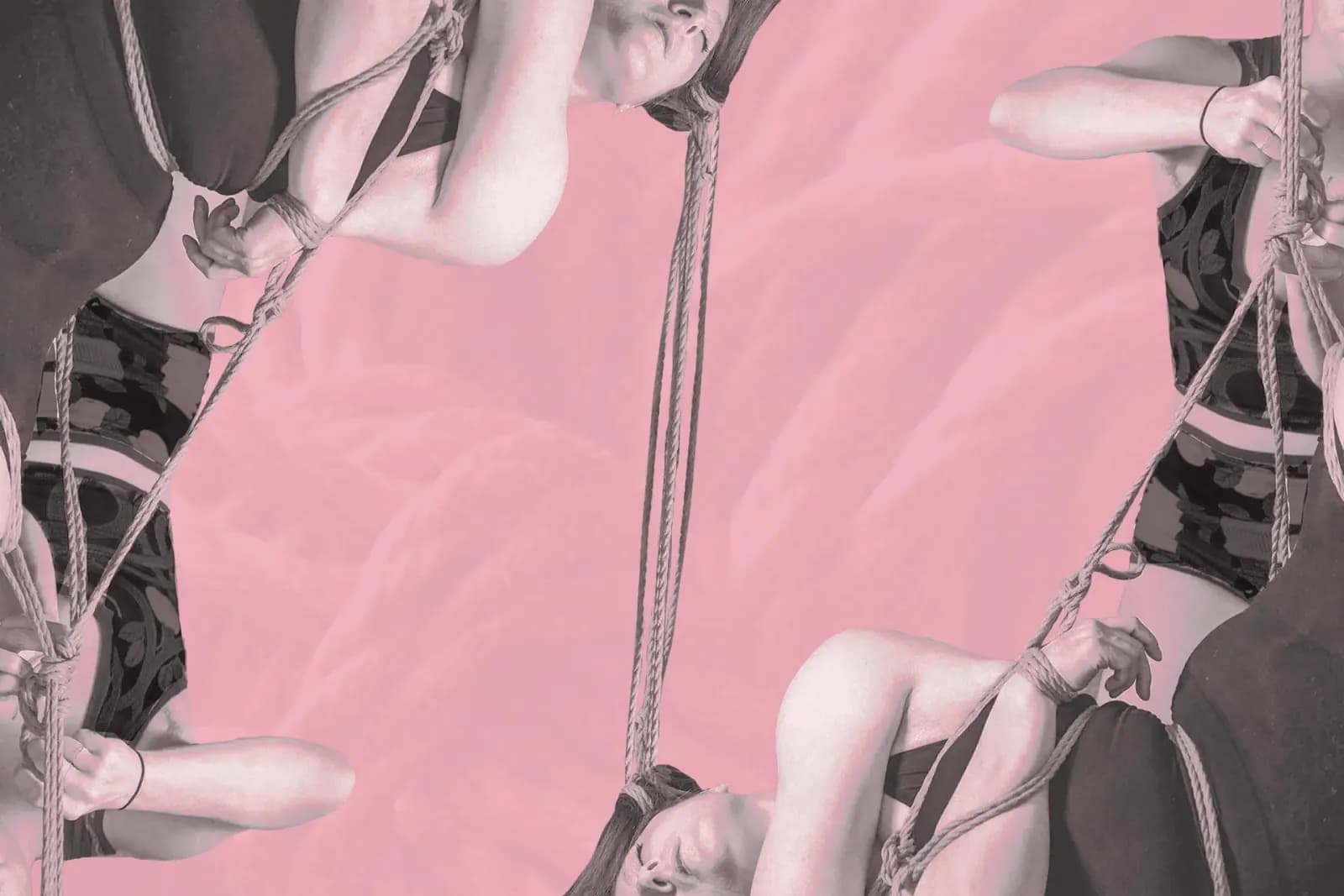
Their body has its own list of conditions: prominent radial nerves, wrist sensitivity, a lower back that doesn’t love bending, and bony shins. Some arms-front ties can even bring up dysphoria, depending on the day.
What pictures like the following do not show is that these limitations shape their scenes in practical ways. Backbends require monitoring, futomomos work best when the load stays on their thighs rather than their shins, and TKs need careful attention to how the wrist band is tied.
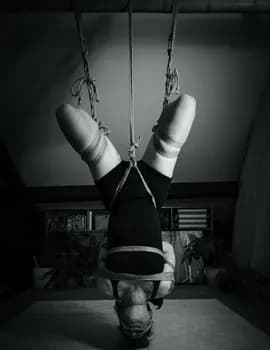
Rigger: @Fae_Sybarite
For a long time, seeing shapes they struggled with made them feel “not good enough”. Flexibility, age, body shape… They compared them all. But over time, they learned to value what they bring to a scene: years of experience, a sharp sense of body awareness, and the ability to communicate clearly. And people value that. A lot.
Their reminder is beautifully simple: “I am enough.”
“Embrace vulnerability and take the chance” – Marty
Marty describes himself as a semi-experienced bottom. He has been in the rope scene for a little over two years, but has been into bondage and self-tying for a lot longer. One of his struggles is his body size and build. As a heavy-set athletic person, he worried that his size made him difficult or intimidating to tie, especially in suspension.
He also carries a deeply personal challenge around gender expression. He longs to see himself in what he calls “feminine placements”, but when tied, he often feels he looks “too masculine” – especially compared to poses he sees on others. This sometimes leaves him disappointed or disconnected from the version of himself he wants to embody.
As strategies, Marty describes experimenting with sometimes imagining himself differently, or sometimes choosing clothing that helps him access a more feminine space. He’s still learning to believe that his expression is fully “acceptable” and “Queer Enough” for rope and the spaces he wants to be in.
His key goal for himself is something both experienced and new people in rope need to be quietly reminded of: “Be willing to embrace vulnerability… take the chance, make mistakes, and be a beginner at something again.”
“Make your journey your own” – Willow
Willow started rope four years ago with a highly experienced instructor. This way, she learned risk awareness and communication from the start.
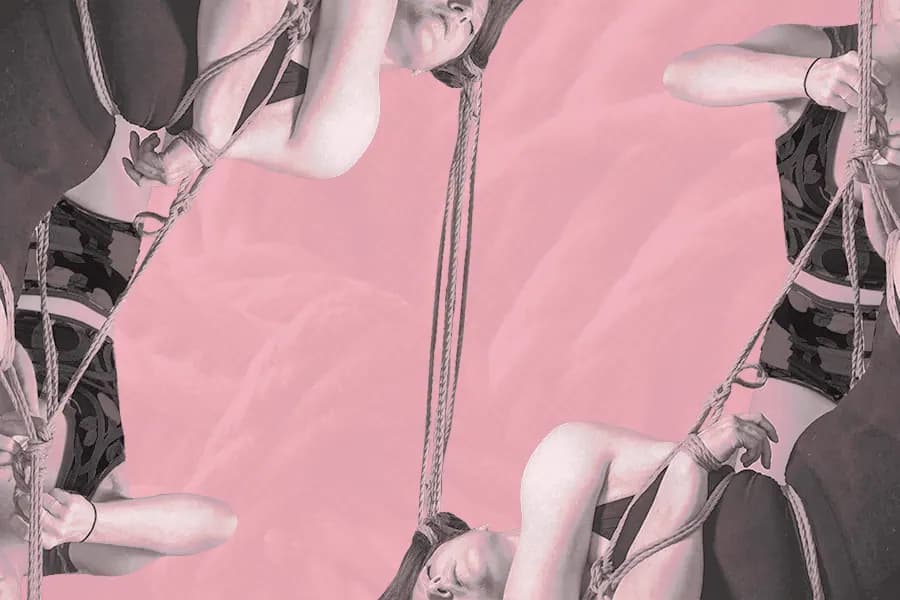
Many of Willow's limitations you don’t see in the picture. For one, she’s very flexible… but not always helpfully so. Her body moves more than riggers expect, meaning ties like strappados require tighter, more intentional wraps to stay in place. On top of that, she has very sensitive shins, which can end a scene fast if the pressure lands wrong.
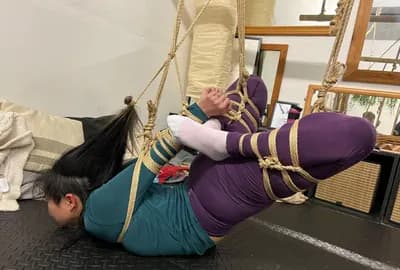
Rigger: @Tangled.Bunny
Social media comparisons hit her hard in the beginning. She found herself comparing her body, her strength, and her shapes in rope to bottoms she saw online. Wanting to look “as good” and feel “as strong”.
Over time, and through a lot of honest conversations with other bottoms, she realised something most of us forget: Everyone has their own invisible struggle.
Her message is this: “Make your journey your own. Your experiences are unique to you.”
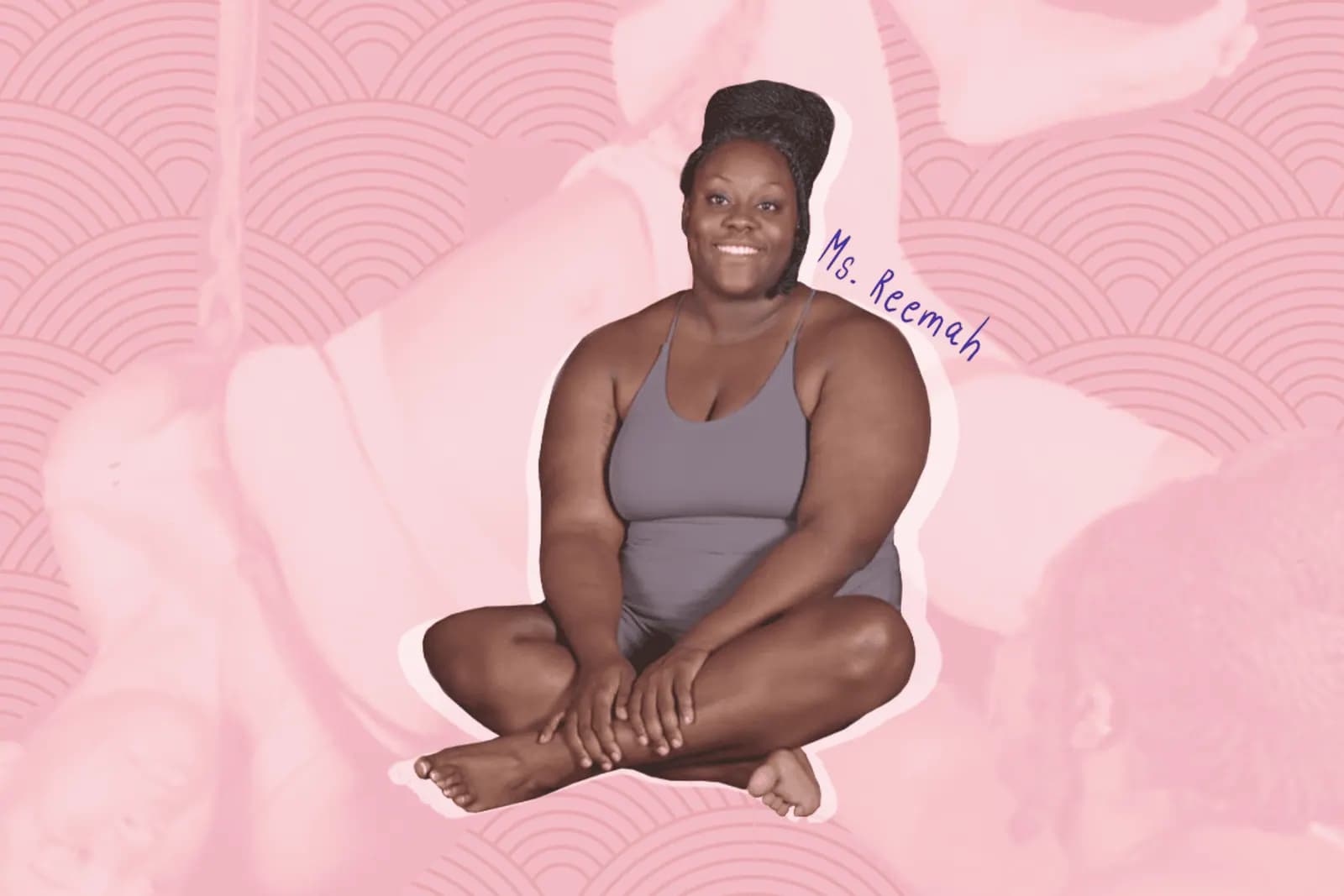
“I don’t have the privileges others do, and that’s okay” – Red
Red is newer to rope, without a regular rigger. As a single parent of two with limited time and finances, rope has to fit into the small pockets of time she gets twice a month. This leftover time has to cover family, friends, rest, and – if she’s lucky – rope. On top of that, shibari workshops are often too expensive and her access to dedicated rope spaces is very limited.
Red’s body needs a lot of time to reacclimatise to sensations in rope. She describes herself as “stiff” and “not rope-conditioned", which means that when she does get the chance to tie, it takes a while to figure out what feels right and what her body can comfortably take. Sometimes a tie will make her panic simply because she hasn’t felt it in so long. She talks about not being as bendy as some rope bottoms either. As she says, “I’m older and I am very aware of it all.”
At workshops she has looked around and felt like everyone is coping better, moving more easily, or lasting longer. And that comparison hits deeply. She worried she was holding her rigger back, wasting their time because she couldn’t “keep up”.
Her mindset hasn’t been magically fixed, but she’s slowly rewriting the story. She knows her circumstances, time, finances, and access aren’t the same as others. And that doesn’t make her any less worthy of rope.
Her conclusion is soft but steady: “It’s a learning curve… and that’s absolutely fine.”
In conclusion: creation, not limitation
If there’s one thing I hope people take from this, it’s that rope was never meant to be a competition: not with others, and not with some imagined version of yourself. Our bodies hold histories, quirks, injuries, sensitivities, and strengths. Those aren’t flaws to erase; they’re the realities we get to create with.
Comparison grows in silence. When we share our insecurities, limitations, and the messy bits behind the velvet-smooth photos, something shifts: we realise limitation is universal and nothing to be ashamed of.
Our bodies hold histories, quirks, injuries, sensitivities, and strengths. Those aren’t flaws to erase; they’re the realities we get to create with.
What matters is finding the people who meet you where you are, who build with you, and who enjoy the process of discovering what unique journey you can take together.
We all have our own reasons for doing this, but one of those reasons is joy. And joy is something that should always be allowed to take up space.