














Fuoco

Northampton, MA, United States

Doing rope since 2012. Switchy AF. Director of Education for Shibari Study

30 Nov 19:11

Not a direct answer to your question, but I can say that we’ve got some furniture bondage tips coming your way later this year. And I loooove that car bondage too. 

Reply

30 Nov 17:22

Thanks for the request! I’ll add it to our list of content requests! We check this list regularly when planning productions, so feel free to keep the suggestions coming <3

Reply

24 Nov 15:15

Hey! So my off-the-cuff quick answer is that the hip loader (or something that supports similarly to it) can be a really nice option for hashira. Lots of times something like this would be anchored to the back or side of the hashira.Hashira requires a lot of specific/unique techniques. It also comes with an elevated risk level that makes lots of instructors wary of teaching it online. That said- I’d definitely encourage you to find in-person instruction on the topic in addition to checking out the hashira content in our library :) 

Reply

2) same goes for figuring out which harness to learn next. Using the level filters can be really helpful. So choose one harness in each category (hip harnesses/futomomos/upper body ties/etc.) But specifically choose a harness in each category that’s labeled Level 2. One of the things that happens early on with pattern learning is that the repeating themes/building blocks from one pattern to another start to be clear. If you start with level 2 harnesses you’ll be working with familiar themes/building blocks between patterns. It’s similar to language learning, when in the beginning you’re learning alphabets and words and then you progress to learning grammar and sentence structure. At that point you start to be able to understand a wider context and the individual words start to matter less. That’s the goal at this point- to move from words to understanding grammar/context. Not sure if that totally makes sense. Feel free to DM me if you want to talk more! 

Reply

24 Nov 15:02

Hey David! Welcome! This is such a good question and we’re working hard behind the scenes right now to help make some of these decisions more clear. A couple of things I’d like to suggest: 1) for working on the emotional dimension of tying, I always recommend that people work with familiar techniques/relatively simple technical concepts. Based on what you’ve described about your level, I’d check out the Floor Play category and find some inspiration there. Find a class that feels technically very easy (you can sort by levels within each category page, and looking for something that’s level 1, 2, or “open level" would make sense) and  then try to play with focusing more on connection and less on the ropes. If you want more specific/actionable instruction on connection than that you could check out “exposure and closure” or “the feelings game” for more specific ideas. These are “open level” classes and I linked them above for you!

Adrian I love this so much! The arc of this feeling and adapting over and over is so much of what I love about bottoming for rope ❤️you described it beautifully

Reply

Posted

19 Nov 18:59

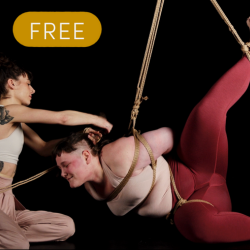
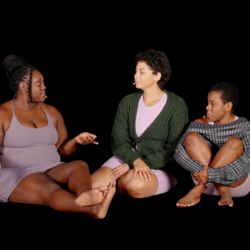
I’ve been so excited for this performance to drop! It’s free for non-members too, so send it to all your friends as inspo for your next group rope scene :)

https://shibaristudy.com/programs/co-tying-performance-free

2

ø Zero ø Ha, indeed! It is the gravest of sins!

Reply

ø Zero ø Curious if you’ve had a chance to listen to all of the finger hooking instructions in this tutorial? Would different rope handling make the tight space a non-issue? I’d say that it’s better to find a handling solution (or just back up one rung and re-tie) than to make your rope go slack and ask your partner to flex into it. FWIW, I un-tie/backup my rope in the middle of tying all the time if I realize that I need a little more or less space for something. Let me know if the finger hooking seems like it would help! 

Reply

11 Nov 18:36

This location looks dreamy