Why “Good Communication” In BDSM Is Harder Than We Think
Communication in kinky scenes is an integral safeguard against misunderstandings and uncertainty, yet intimate experiences are rarely so predictable or neatly contained by negotiation alone.

“Communication is key.” If you’ve spent any time in BDSM or rope spaces, you’ve likely heard this phrase repeated often, and for good reason! Clear negotiation, stating your boundaries and desires, and checking in with each other are essential to creating safer, more intentional experiences. And yet, even when we do all of that “right”, things can still feel… off.
Recently, a rigger I was considering tying with sent me a detailed checklist in advance: an extensive list of things to mark as yes, no, or maybe. It was thoughtful, careful, and clearly intended to create safety. However, I noticed myself hesitating.
My experience in rope tends to shift: something that feels like a “yes” in theory can feel different in my body, and something I wouldn’t have named beforehand can become meaningful through the interaction itself.

Not because I didn’t appreciate the care, but because I realised that no list could fully capture how I might feel in the moment. My experience in rope tends to shift: something that feels like a “yes” in theory can feel different in my body, and something I wouldn’t have named beforehand can become meaningful through the interaction itself. What I found myself wanting, perhaps surprisingly, was not just someone who would follow my list precisely but someone who could stay attentive to those shifts – someone who could notice ambiguity, respond to it, and remain in dialogue with me as the experience unfolded.
The limits of communication
Many of us are taught to think of communication as a skill set: say what you want, ask clearly, check for consent, use safewords. These tools are incredibly valuable and they do make a difference. But they also give the impression that, if we just communicate well enough, we can prevent misunderstandings altogether. In practice, that’s rarely how human interaction works.
Perhaps the difficulty here is not just that we need better communication skills, but that communication itself is more complex than we often acknowledge.
We don’t always know what we feel in advance or what may come up. We may say “yes” to something that later lands differently. We might struggle to articulate discomfort in the moment, or only realise afterwards that something didn’t sit right. Our partner, meanwhile, is interpreting us through their own expectations, experiences, and assumptions. Even with the best intentions on both sides, communication can miss. Perhaps the difficulty here is not just that we need better communication skills, but that communication itself is more complex than we often acknowledge.
The role of misattunement
In rope, as in many intimate practices, we often rely not just on words, but on reading each other: body language, tension, breathing, small shifts in energy. This creates beautiful possibilities for connection, but it also opens the door to alternative readings of the situation and our experience. Misattunement doesn’t necessarily mean that someone did something wrong. It can be subtle.
Maybe our partner thinks we’re enjoying something because we’re quiet, while we’re actually unsure how to speak up. We assume they understand our hesitation, while they read it as anticipation.
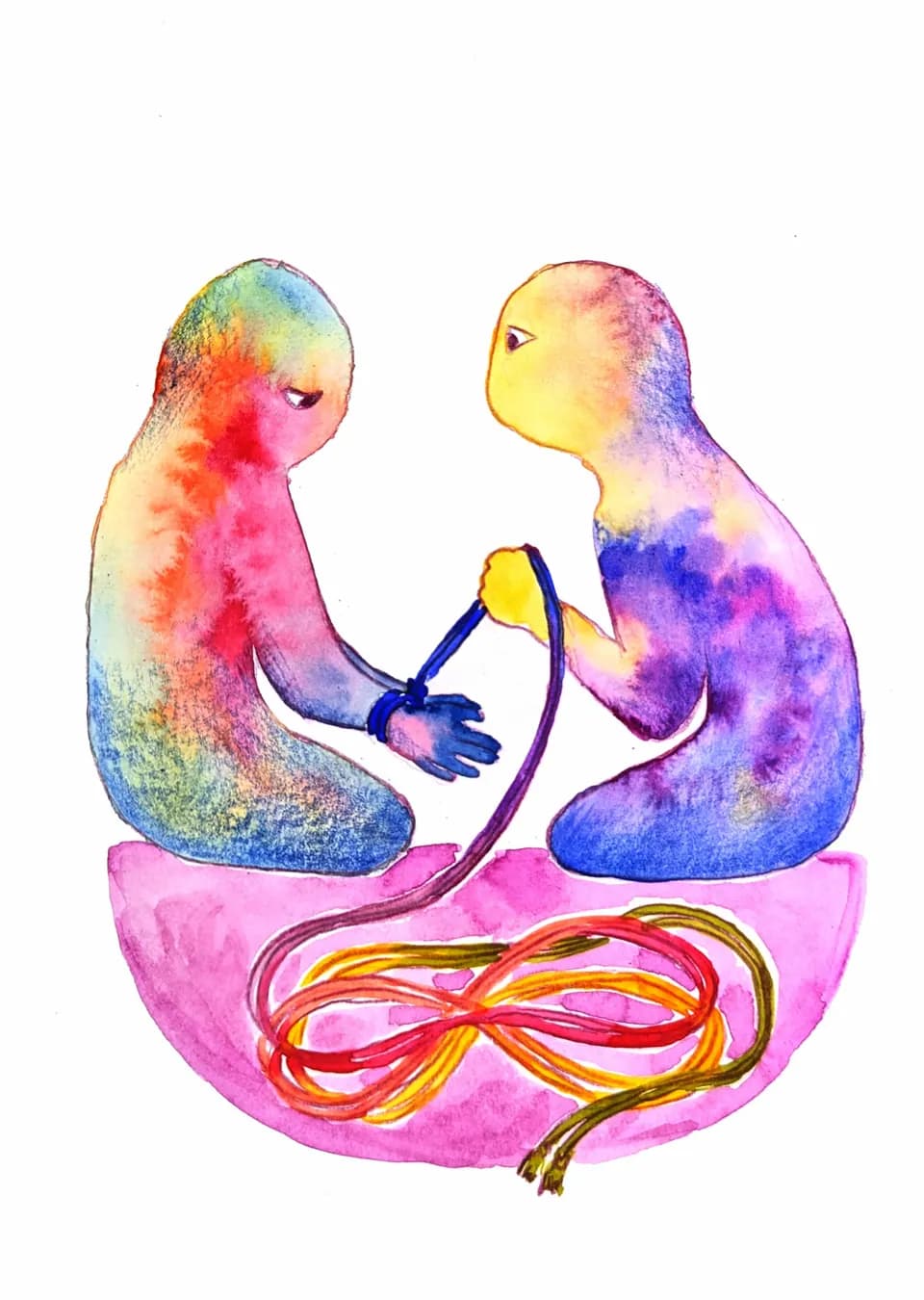
Maybe our partner thinks we’re enjoying something because we’re quiet, while we’re actually unsure how to speak up. We assume they understand our hesitation, while they read it as anticipation. These small mismatches are part of being human and part of what unfolds in (rope) scenes. They don’t disappear just because we’ve had a good negotiation beforehand. What matters is not eliminating these ‘mismatches’ entirely (I don’t think that’s possible) but recognising that it will happen, and that it is something we can work with.
The grey zone of experience
One of the reasons communication can feel difficult is that our internal experience is not always clear or consistent. You might feel both excited and nervous at the same time. Curious, but also resistant. Engaged, but slightly disconnected. These are not contradictions to be solved; they are part of how many people experience intensity, vulnerability, and trust. In these moments, it can be hard to translate experience into clean, simple language.
Not everything we feel fits neatly into yes/no, comfortable/uncomfortable, good/bad. Sometimes we’re still figuring it out as it unfolds.
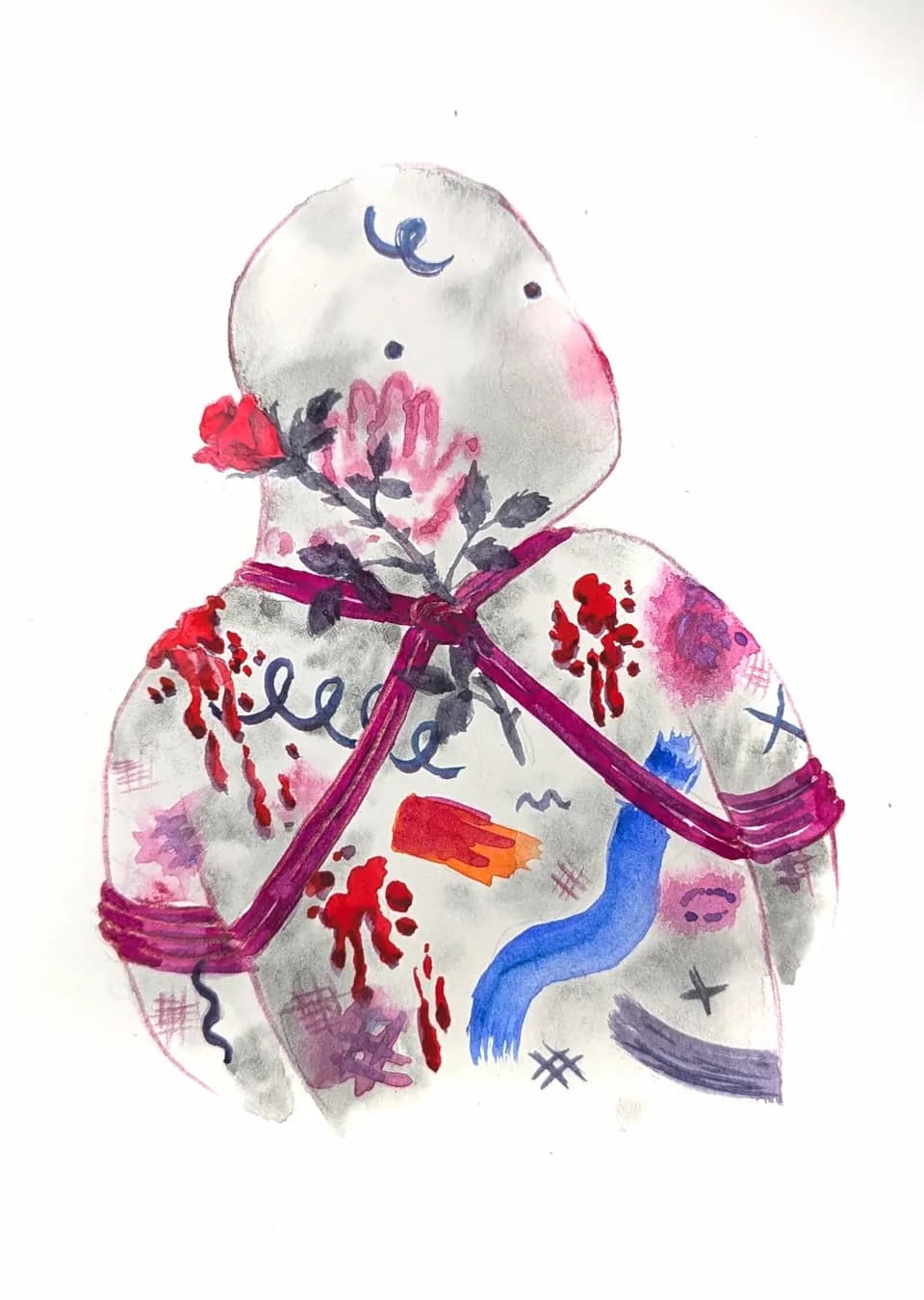
This is where the idea of a “grey zone” becomes useful. Not everything we feel fits neatly into yes/no, comfortable/uncomfortable, good/bad. Sometimes we are still figuring it out as it unfolds. Good communication, then, is not only about expressing certainty. It is also about making space for uncertainty, both in ourselves and in relation to each other.
Beyond skills: staying with what’s unresolved
If communication isn’t only about clarity, what else does it involve? One important aspect is our ability to stay present when things don’t go smoothly. This might look like:
- pausing a scene because something feels unclear;
- checking in (the day) after, even when nothing obviously “wrong” happened;
- being open to hearing that something landed differently than we intended;
- acknowledging when we misunderstood or missed something.
In other words, communication extends beyond the moment of negotiation or the use of the right words. It includes how we respond to confusion, discomfort, or mismatch. This is where repair becomes part of communication – not as a failure, but as a continuation of it.
Communication as a practice
It can be reassuring to think that, if we just communicate well enough, everything will go according to plan. But that expectation can also make it harder to deal with the moments when it doesn’t. If we instead see communication as an ongoing, shared practice – one that includes missteps, adjustments, and repair – it becomes a little more forgiving, and perhaps more realistic.
In my own experience, some of the most meaningful moments in rope haven’t come from perfectly executed scenes, but from what happened around them: the conversations afterwards, the acknowledgements of when things went south, the willingness to stay in dialogue even when things felt uncomfortable or unclear. This brings me back to that checklist.
I want to be clear: I’m not arguing against checklists, negotiations, or written agreements. They can be thoughtful tools that help people articulate desires and boundaries, especially when building trust with someone new. But perhaps we have come to rely on them as if they could replace something more difficult and more human. A list can capture preferences. It cannot fully capture a body’s hesitation, a shift in breath, the subtle moment when curiosity turns into uncertainty. Those are things we can only learn to notice through presence and practise.
I want to be clear: I’m not arguing against checklists, negotiations, or written agreements… But perhaps we have come to rely on them as if they could replace something more difficult and more human.
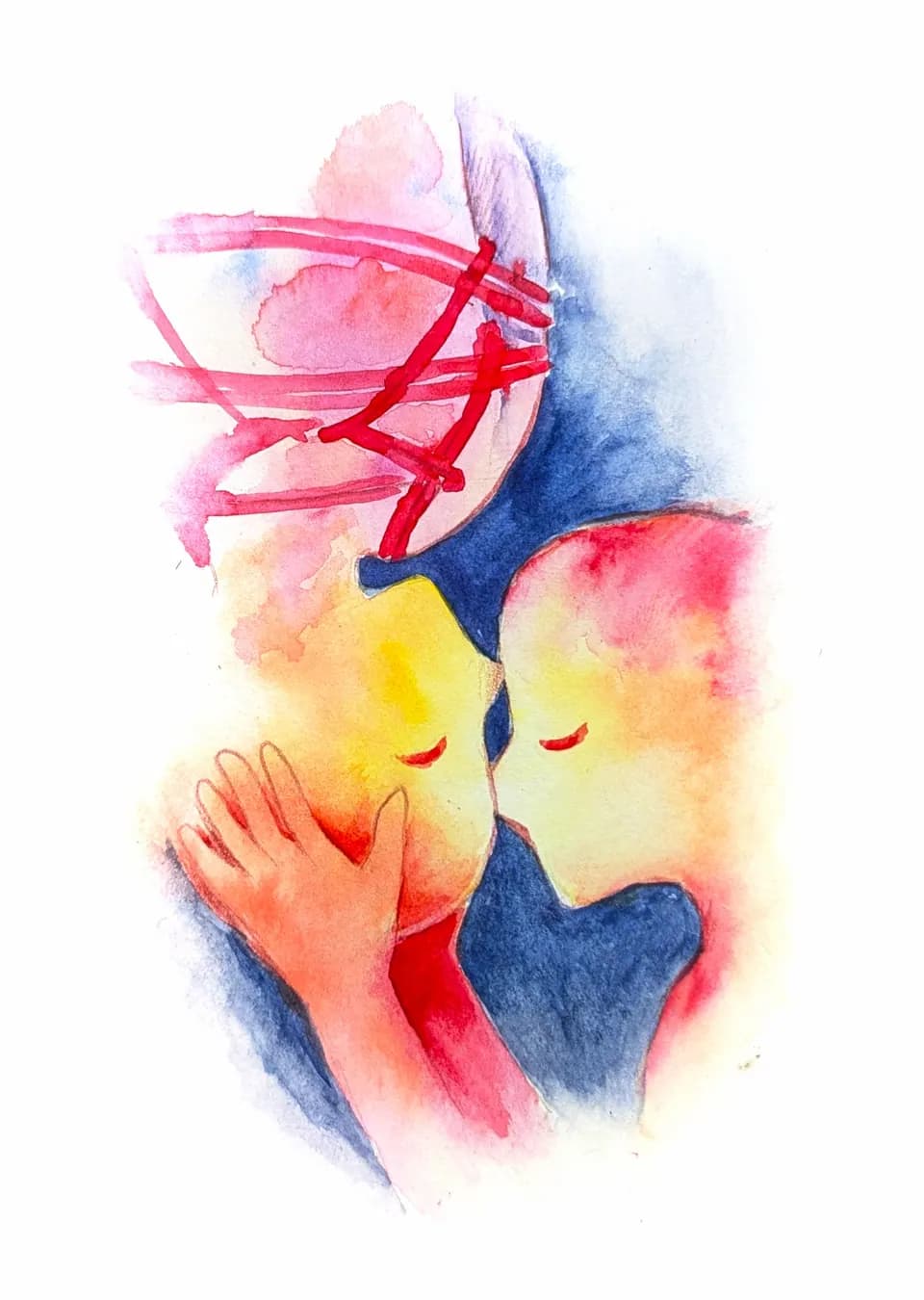
Perhaps the real challenge for our community is not simply to become stricter in what we put on paper, but to become more skilled in how we stay with ambiguity. To (re)learn how to read cues, how to pause when something feels off, and how to remain in dialogue when the experience no longer fits the script.
In times where many people understandably feel anxious about getting things wrong, it can be tempting to look for certainty in forms, lists, and procedures. But safety does not come from paperwork alone. It also comes from our capacity to notice, to respond, and to repair. Communication, then, is not just about getting it right. It is about staying in relation, even in this “grey zone”.