“I’m A Shibari Beginner, What Do I Need?”
A no-bullshit guide to exactly what you need to start practicing rope bondage for the first time (and it’s less than you might think).

The beautiful images we see of shibari online often showcase the practice at its most awe-inspiringly complex: we see complicated patterns, bodies bound and twisted into seemingly impossible shapes, advanced techniques, and also – if we’re real about it – just a ton of stuff. Like so much stuff. Endless hanks of rope, suspension rigs, bamboos and rings, tenugui and gags, tatami mats, carabiners, tools for safety, toys for tormenting… If you’re just starting out, this aspirational representation of rope bondage might be just the catalyst you need to dive head-first into your practice – or it could intimidate you into never picking up that first rope at all.
Much like many other hobbies centred around using specific tools or equipment, it can be easy to fall into the trap of thinking that you need all the requisite gear right now in order to start.
Much like many other hobbies centred around using specific tools or equipment, it can be easy to fall into the trap of thinking that you need all the requisite gear right now in order to start. Not so! Before you tie yourself up in knots, here’s your practical, essentials-only guide to everything you need to start a rewarding, safer and satisfying rope bondage practice today…
Suitable ropes for shibari
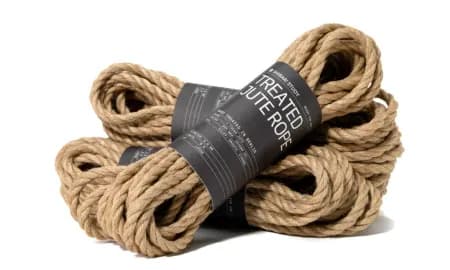
There are a lot of things that you probably don’t need in order to advance your shibari practice, but rope isn’t one of them. However, do you need a full suspension-worthy rope kit to begin learning shibari? No. Could you go to the hardware store and pick out just about any cheap rope to start wrapping your head around your first knots and frictions? Technically, yes. Do I recommend that? Probably not… At least, not without first understanding the properties of the different types of rope and their pros and cons, what makes them suitable for bondage and what might speak against using them. (If you’re ready to start researching, you can take a deep dive into all things rope with our Rope Guide series.)
But if that all still seems too overwhelming, girl, same. Here’s the smart investing, money-saving, shibari practice-advancing rope real talk I wish someone had had with me when I was starting out:
- Not only are you going to spend many, many hours tying and practicing skills on the floor before you even think of working your way up to anything as advanced (or rope-intensive) as a suspension, you’re probably going to spend many hours just perfecting a few basic knots and frictions. Many of the first ties you learn only require one rope and most of the first shibari harnesses you learn will use two or three 8m hanks of rope at most. Your rope kit can grow with your practice, but you don’t need more than a few hanks to start with.
- That said, if you’re going to make one investment when starting shibari, make that your ropes. The rope you choose to begin with is going to create the framework for your technique and rope handling skills going forward: how you tie might need to be adjusted for your specific rope type’s behaviour in knots, frictions and – of course – in your hands. Tying with cotton is going to feel very different to tying with jute rope. And tying with any old hardware store rope is absolutely going to feel very different to tying with premium shibari rope.
- Many people practicing shibari opt for natural fibre ropes such as jute or hemp as widely tried-and-tested ropey fun all-rounders: they hold frictions and tension reliably, can be used in load-bearing capacities, and have a good lifespan when properly cared for. Because their use is so widespread, you’ll likely find that many rope dojos, shibari teaching spaces and platforms such as Shibari Study teach skills and techniques specifically centred on these fibres.
- The thickness of your rope does actually matter. Thicker ropes (6mm and over) are stronger, making them safer for suspensions; thinner ropes are more suitable for playing on the floor and for highly decorative rope work. A diameter of 6mm is considered the most versatile, but there’s nothing wrong with starting out with skinnier ropes and adding some thicker ‘uplines’ down the line when you start learning suspensions.
- Likewise, the length of your ropes matters too. While ropes under three metres may be great for binding the wrist or ankles, you’re going to need significantly more length than that when you start building harnesses. A “standard” hank of rope is between eight and nine metres (consider that most shibari ties use rope doubled over to form a “bight” in the middle and eight metres of rope suddenly doesn’t sound quite so long after all). How far your rope goes will mostly depend on the size of the person being tied – if your partner has a much larger body type, you may decide a longer, custom length is better.
- Whether you buy treated or untreated shibari ropes may be a matter of personal preference (or budget). If you’re just starting out and it’s available to you, treated ropes are always going to be more beginner-friendly – they’ll be gentler on the skin, easier to handle and less likely to cover absolutely everything in fuzzy rope fibres.
Rope cutting tools
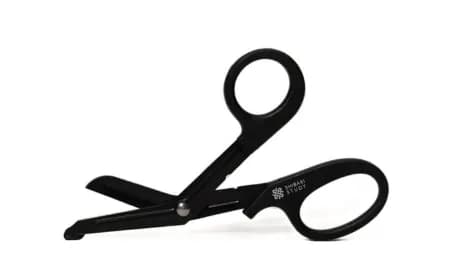
Navigating and evaluating risk is an essential shibari skill and one that you’ll need to start flexing from your very first ties. Safer and more confident tying is not only about knowing what can go wrong in ropes, it’s also about knowing what to do when things don’t go as planned. For that, you’ll need a solid grounding in General Rope Safety fundamentals, but you’ll also need the one piece of equipment you hope you’ll never have to use but shouldn’t practice ropes without: a cutting tool.
Knives are a big no-no in this instance, as they can quickly elevate a regular rope emergency to a blood-soaked rope emergency with one slip of the blade. Instead, opt for something made for use in crises – EMT safety shears are a good bet for protecting the person being tied while quickly and cleanly slicing through rope, while rescue and seat belt cutters are also designed with safely working close to skin in mind. Learn how to use your tool of choice before you ever need to and make sure it’s always in reach (not in your bag, not in a cupboard somewhere) each and every time you practice ropes.
A gameplan
Nobody ties a perfect full body harness the first time they pick up a rope. To understand why and to set realistic goals early on, it’s useful to think of shibari like Lego. Each of those gorgeous ties you aspire to recreate is constructed from a clever combination of fundamental knots and frictions, the building blocks of your practice. Learning these basics is what sets you up for everything to come – master them early and you’ll grow your practice exponentially. At the same time, grant yourself a little grace and space to mess up while you’re still getting the hang of things. The Shibari Study Getting Started category is designed with beginners in mind and an understanding that as well as laying the groundwork for your practice, your first ties should be easy to follow and fun.
What about someone to tie up?
If you’re just starting out and have a willing, consenting rope partner, that’s great. And if you don’t yet have a rope partner, that’s also totally fine. At its core, shibari is about applying ropes to the body – this is why you’re here, after all, and not perusing macramé dot com – so yes, to practice shibari you will need someone to tie up, but that person can absolutely be yourself. All of the first knots you learn can be tied on your own body – or even on a DIY makeshift dummy. In fact, many self-tyers are able to progress to advanced levels only by tying themselves (but that’s a whole different blog post).
If you take away one thing from reading this (aside from to always keep your damn safety shears close by), I hope it’s that there’s virtually nothing to stop you from experiencing the connective, stimulating and exciting experience of learning shibari pretty much right now. The best and most rewarding practice isn’t about how much stuff you have but about what you do with it – and you can do so much more with even just a few ropes than you can imagine!
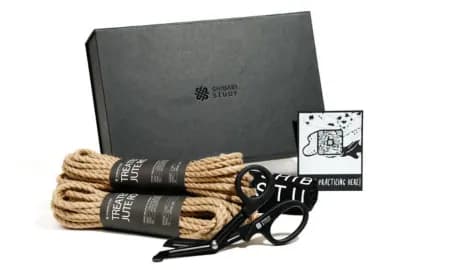
Shibari Study has taken the guesswork out of starting out with the expertly curated Shibari Beginner Kit. Comprising three premium conditioned 8m jute ropes (6.1mm diameter), a pair of professional EMT safety shears and a tote bag and magnetic box to store it all, as well as a digital learning beginner road map with safety fundamentals and first ties, the only thing missing is you.