Is Kink Therapy?
Going to a Domme for your mommy issues? BDSM instead of SSRIs? And let’s not even get started on CBT… Aria Vega asks what we’re all thinking: is kink actually therapeutic?
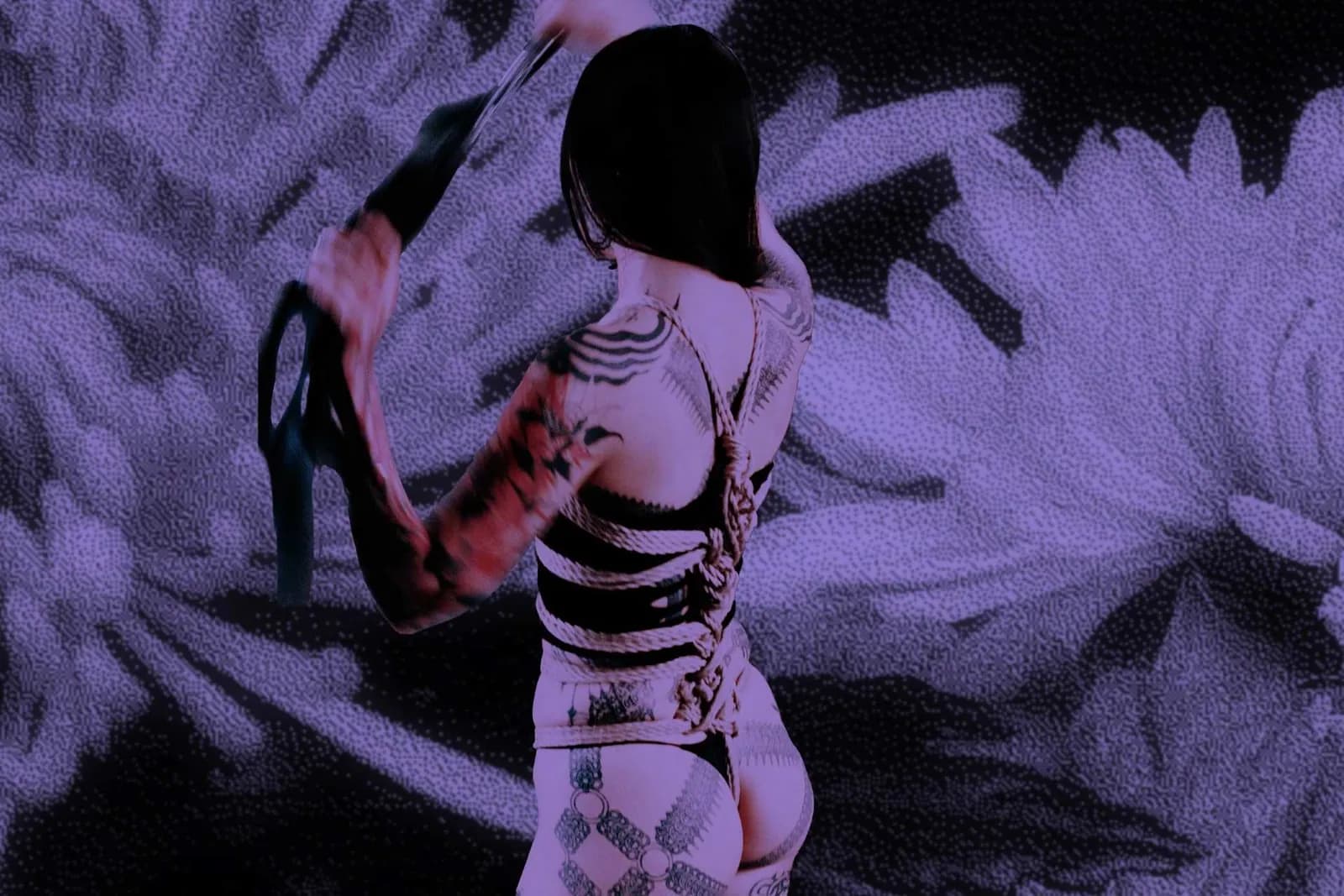
Now and then the BDSM world gets embroiled in a raucous debate. The one presently looming large explores the therapeutic value of kink, something Violet Bights, a rope educator and licensed clinical social worker, finds inherently interesting.
Working at the intersection of kink and mental health, Violet has had a unique vantage point of the discourse, from social media to her private practice. She credits the 2023 release of Sexuality Beyond Consent: Risk, Race, Traumatophilia, written by psychoanalyst Avgi Saketopoulou, with giving the idea an urgent new tenor.
“It sparked some really powerful conversations about how trauma and personal history show up in how we play,” Violet says. Though it also could have also led us to overanalyze our own desires.
This notion of purpose is perhaps most helpful here – is pursuing a sound body and mind what actually makes us kinky?

“Therapy” is commonly defined as activity that improves physical and psychological health, or functional capacity, for which these outcomes are the point of such activity. This notion of purpose is perhaps most helpful here – is pursuing a sound body and mind what actually makes us kinky?
I’m not a pollster, but I have to imagine that most would say no. BDSM isn’t some eccentric form of exercise, but rather a craft, a scene, and a fixture of identity. And yet it absolutely comes with some physiological benefits.
Therapeutic vs. diagnostic
Might BDSM be better understood as a diagnostic tool? It can feel like everyone at the munch either has a story or has heard one about kink helping to identify some inner misalignment.
That’s true for Shibari Study co-founder Gorgone, who credits shibari with helping them combat the dissociation caused by ADHD and hypermobility. They describe their first experience of being tied as a “sudden incarnation”; an instant and unprecedented sense of feeling grounded in their body.
The stats say this is common. According to The Alternative Sexualities Health Research Alliance (TASHRA), some of the likeliest motivations for participation in BDSM include mental health support, mindfulness, addressing neurodivergence, and interoception management.
With its clear communication frameworks, unique sensory profile, and built-in community, the BDSM scene is well equipped to address the oft-unmet needs of neurodivergent people. One prominent statistic, from academic and researcher Liam Wignall, cites that some 30 to 50 percent of people in kinky communities may display traits of autism.

This doesn’t mean that seeing a Domme will erase your social anxiety or cure your mommy issues (“As much as Freud would love for us to believe otherwise,” jokes Violet). Still, kink offers other pathways to personal growth, said Gorgone in a recent interview. “I don’t think shibari has healing properties, but I do think it’s a medium that helps us practice intimacy, empathy, and sensory awakening in general.”
"Rope will show you how connected you are to yourself and to others, from your sensations, your limits, and your desires. But if you’re a highly disconnected, selfish person, your shibari is going to be disconnected and selfish, too.”
It’s about cultivating a particular awareness. “Rope will show you how connected you are to yourself and to others,” Gorgone continues, “from your sensations, your limits, and your desires. But if you’re a highly disconnected, selfish person, your shibari is going to be disconnected and selfish, too.”
In the eye of the beholder
There’s a case for withdrawing even further from the implicitly pathologizing framework of treatment and asking why we ever got attached to it. It presents as an outcome of kink’s collision with Western values, which promote a medicalized manner of relating to the body.
Newcomers who don’t unpack their discomfort with shibari’s erotic ethos may sanitize and defang it, obscuring or denigrating its true origins. This is often how subcultures are co-opted into the mainstream, particularly in adult-adjacent realms of expression. Take pole dance, whose PR makeover from strip club staple to a rich-white-lady pastime is nearly complete. But the pendulum swings the other way, too…
A vocal subset of rope experts would prefer shibari practiced at full freak, or maybe not at all. Keenly aware of the lingering stigma – only in 2013 did the Diagnostic and Statistical Manual of Mental Disorders depathologize BDSM – some practitioners believe that it’s only been reinforced through the popularization of rope bondage, even on platforms like Shibari Study, which can sometimes field criticism for its ultra-polished aesthetics.
“Some people feel like it misrepresents and sterilizes the practice,” said Gorgone, who understands where that’s coming from. However, the founder doesn’t agree that the stakes are existential, especially when a tamer appearance wards off the legal and accounting woes that plague porn producers. “I think it’s okay to coexist.”

It’s not just the tourists and purists up in arms: now the spiritualists are in the mix, too. It’s more common than ever to see shibari presented as a path to enlightenment, and often with ill intentions. Violet Bights says her IG ads have been ruined by charlatans hawking $4,000 sessions with “shibari healers” promising a return to a pre-trauma inner divinity – an impossible task even for the most highly trained psychoanalyst. “It’s horrific for so many reasons, and definitely predatory,” she said of such shameless targeting of the troubled.
This fight for the soul of shibari is fascinating. Is it art? Is it medicine? Is it church? These questions reveal more about us than the practice itself, namely a struggle to reconcile moral conflicts in our collective psyche…
This fight for the soul of shibari is fascinating. Is it art? Is it medicine? Is it church? These questions reveal more about us than the practice itself, namely a struggle to reconcile moral conflicts in our collective psyche, and perhaps even a spiritual void. There’s a notable emphasis here on being saved or being cured.
It’s an eerie reflection of tumultuous times. There’s a growing awareness in wealthy nations that the world we’ve built – distracting, extractive – reduces our quality of life. We need more access to true balance than ever. Why couldn’t shibari become a more common method?
Changing cultural tides
Whichever way you lean, just don’t get too comfy. Public perception of shibari will surely evolve. Just look at yoga, that ancient practice considered exotic and taboo in the West until the 1970s. That’s when it rode a wave of wellness culture into global popularity, which still hasn’t crested. Some 300 million and counting practice yoga around the world.
Now there’s an Ashtanga studio in every town in North America, with discount coupons appearing in your mail. Maybe the purists aren’t wrong to worry. Violet Bights says a similar future might be awaiting shibari, due in no small part to being boosted by platforms that are famously censorious of anything slightly sensual.
“The fact that Instagram has become the main place where people share classes or post pictures of ties has created a bit of a vacuum,” she elaborates. “There’s more of this coded language of don’t worry, this isn’t freaky! to make it something vanilla people can swallow, and to not get ‘zucked’ or banned from the sites.” Should that trend continue, the “rope bunny” bumper stickers just might follow.
Wherever the culture lands, there are myriad ways to individually measure what rope and kink can mean to us. A piece of wisdom once imparted by Violet’s colleague Carter J. Carter has stuck with her: “Something doesn’t have to be therapy for it to be meaningful and healing, or for it to help you grow and connect.”
“If we say rope is therapy, it subliminally pushes this message that people do BDSM because there’s something wrong that needs fixing.”

This perspective revealed to her the hidden truth of the original premise. “If we say rope is therapy, it subliminally pushes this message that people do BDSM because there’s something wrong that needs fixing.” And it’s obvious who benefits from that.
The sociocultural forces of rich, powerful countries have turned “wellness” into a fear-driven racket of supplements and subscriptions. But maybe what we’re really seeking is true wellbeing, that feeling of safety and sovereignty that starts from within.