To Box Tie Or Not To Box Tie? The Big Debate
Unfairly maligned icon or fallen-from-grace tie from days gone by? If you’re thinking of giving box ties another chance – or cutting them out of your shibari practice completely – read on…
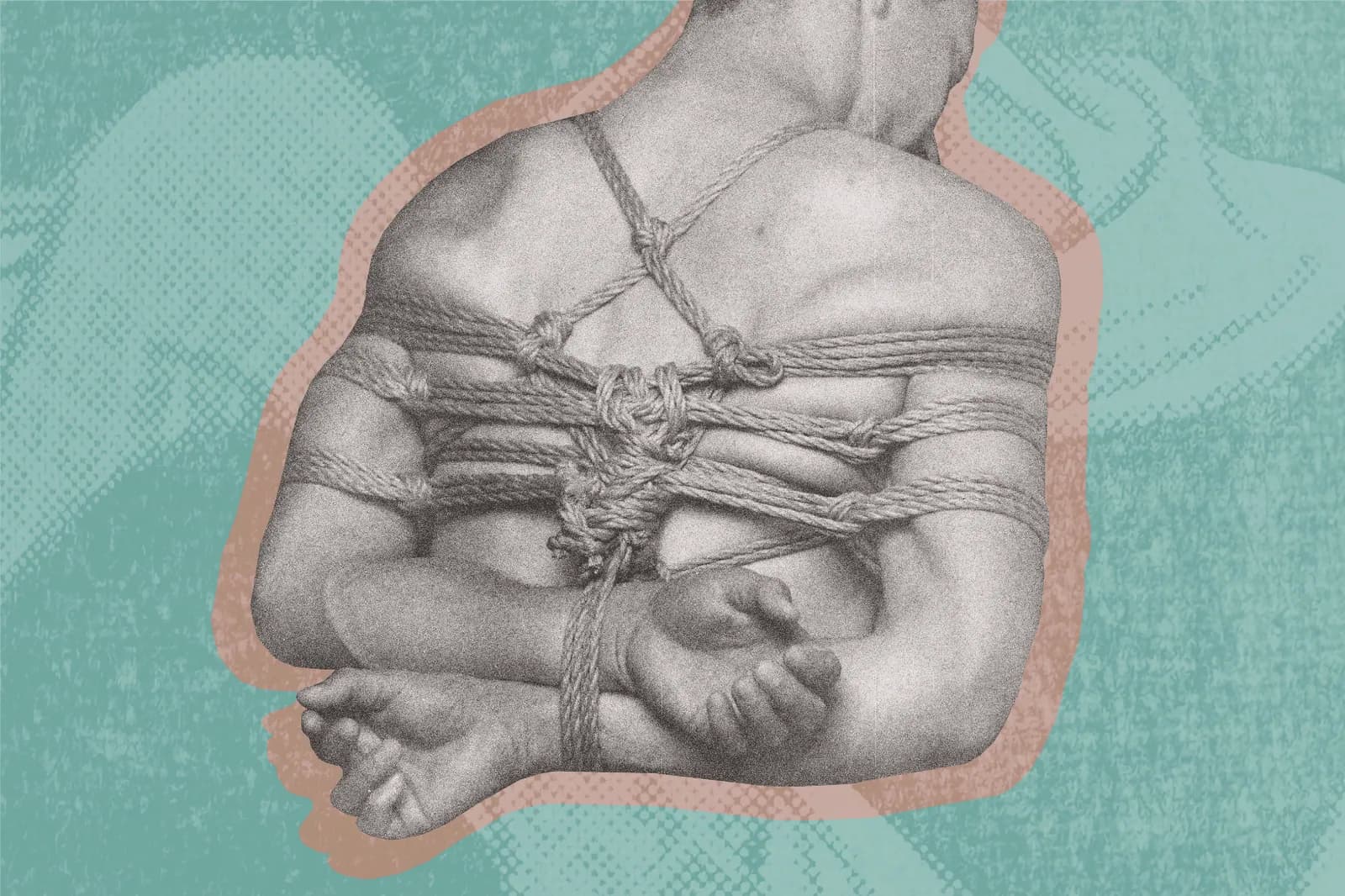
Ten years ago, box ties (also called gotes, takate kotes, or TKs) were the go-to upper body harness. Scenes didn’t start with negotiations about what sort of tie you wanted to be in today or how your shoulders were feeling. They didn’t even start with questions about what style of box tie you preferred. The box tie was assumed, and bottoms who didn’t want to be put in a box were labeled “difficult”. The only other commonly taught and tied form was the strappado – rarely a good solution for the bottoms opting out of boxes. Riggers able to improvise alternative forms were highly skilled, magnanimous providers of rope rides to the undesirables. If we had had the term “woke” back then, those riggers would have earned that label.
Riggers able to improvise alternative forms were highly skilled, magnanimous providers of rope rides to the undesirables.
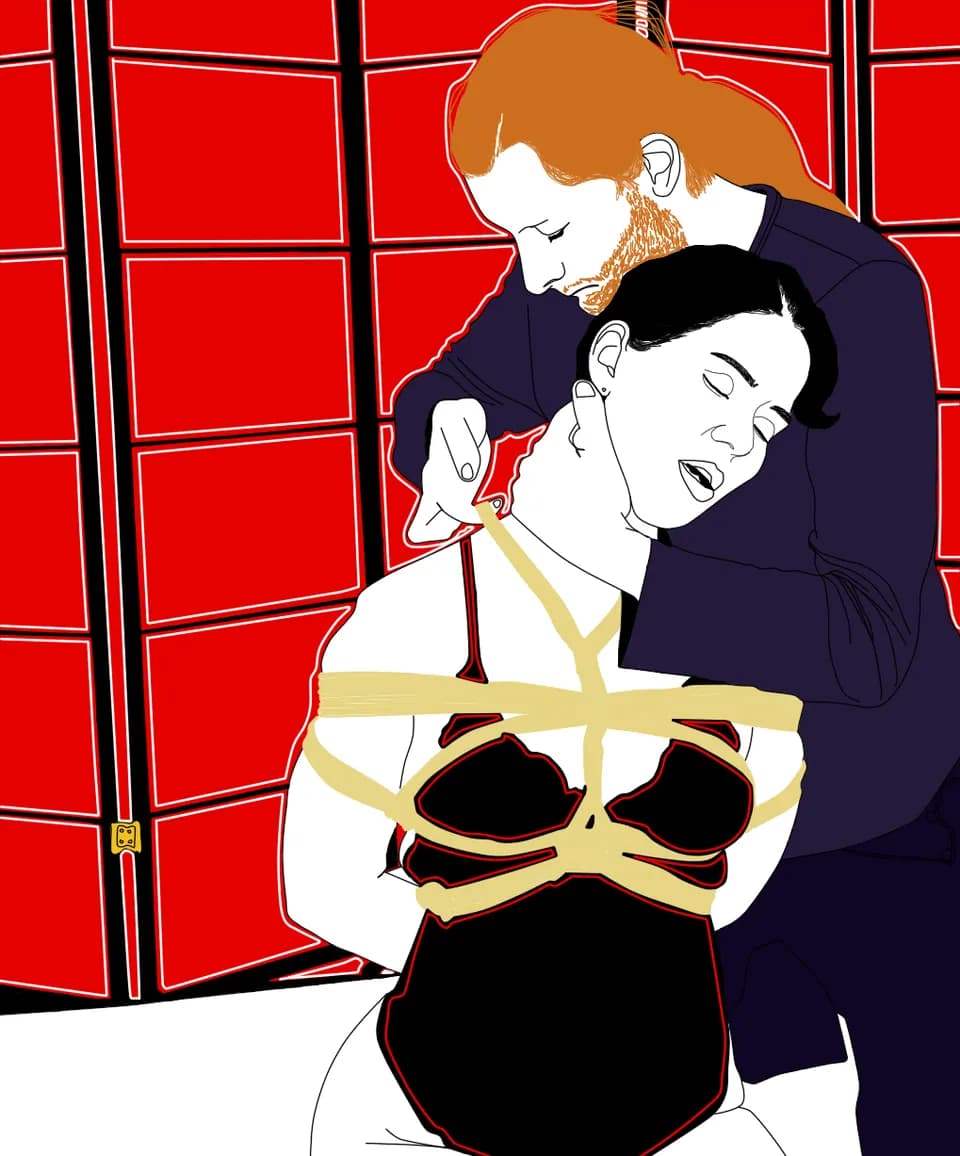
Nowadays I travel and teach and often meet people who have decided out the gate that box ties are outside of their risk profile. In the last year, I’ve met a handful of bottoms who don’t allow rope on their arms. Many studios in North America are onboarding tying pairs into suspension with arms-front or arms-free harnesses, and most people understand proficiency in suspension to indicate knowledge of a variety of upper-body harnesses.
Times are a-changing and I see all of this as a good thing. No one needs to tie or be tied in box ties to have excellent bondage experiences, and no bottom should ever be made to feel less-than for opting out. However, I’m wary of the pendulum swinging so far in the opposite direction that we lose sight of how deeply situated this form is at the erotic root of many people’s bondage practices. There’s something core about the box tie for many of us, and I personally think the pursuit of a great-for-you box tie is a sexy, worthwhile journey. I also think that the box tie has gotten a bad wrap [sic], and I want to offer some historical context to the conversation about risk while laying out a path for your box tie learning journey.
Your anatomical box
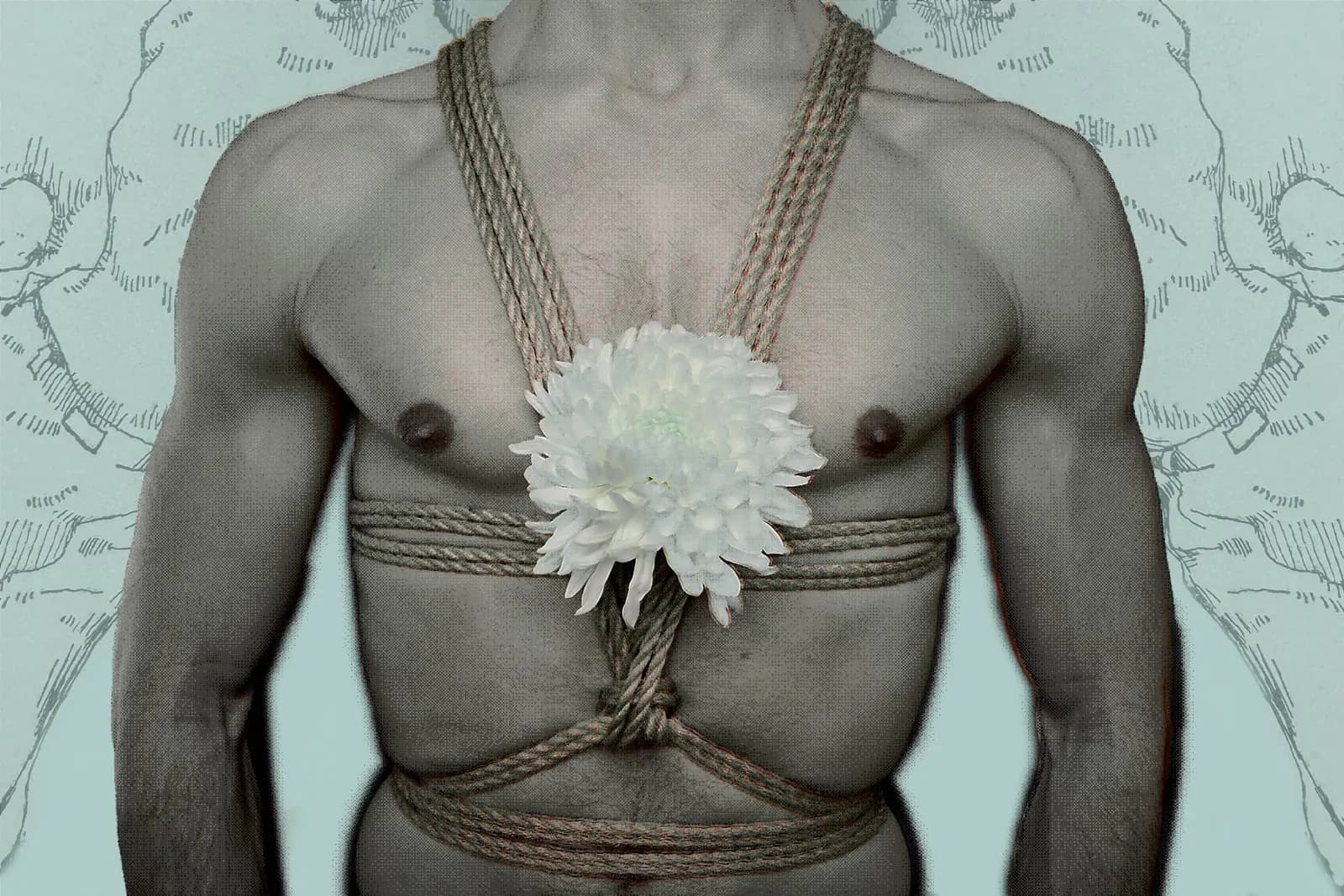
“Your anatomical box” is how I describe what your physical body looks and feels like in a box tie position, sans rope. It’s where I start with people when they want to learn a box tie! How does your body feel to be here? Is there stretch or strain across your chest? Do your arms easily meet your sides or is there a bit of a breeze between your elbows and ribs? This position needs to be both sturdy and somewhat comfy on its own for you to have success tied up and dangling from it. If just being here positionally causes pain or discomfort, I don’t recommend passing ‘Go’ without the support of a physio or other medical professional. If you’re still with me, now is the time to learn about the difference between circulation loss and nerve compression and how to do hand checks.
“Your anatomical box” is how I describe what your physical body looks and feels like in a box tie position, sans rope. It’s where I start with people when they want to learn a box tie!
Story time… I was teaching a suspension intensive in 2014 with an Australian rigger who has since left the scene. In this workshop, my co-teacher and I watched as a participant began checking her hand repeatedly. I asked if she was okay, and her rigger interjected that she was fine. I watched as she continued to check her hand, nearly non-stop. I again asked her directly what she was feeling, and she insisted that she felt fine. She was clearly concerned about upsetting him and he was clearly embarrassed by the questions we were asking her. When she came down and they untied, she was unable to lift her hand.
This was still in the early days of bottoming education. It was new that bottoms were being introduced to rope alongside any advice for how to keep track of what was happening in their bodies. The fact that this was new advice meant that riggers were also new to receiving this sort of information. Power exchange dynamics still implicitly pervaded rope scenes as more of a default expectation than a negotiated dynamic. Blissed-out bottoms who should be seen but not heard were a commodity, and it was common for bottoms to conceal concerns about nerve compression until they were positive something was wrong, at which point it was often too late.
The weekend after that workshop, I sat around in a room full of presenters sharing this story, and every single person in that room had a story about a student getting wrist drop over the course of a long weekend of teaching. To some extent the sentiment being shared was that this was part of the risk of what we do. This was normal.
Box ties got their reputation for being dangerous ties at a time when lack of robust bottoming education and power-laden interpersonal dynamics fanned the flames of risk.
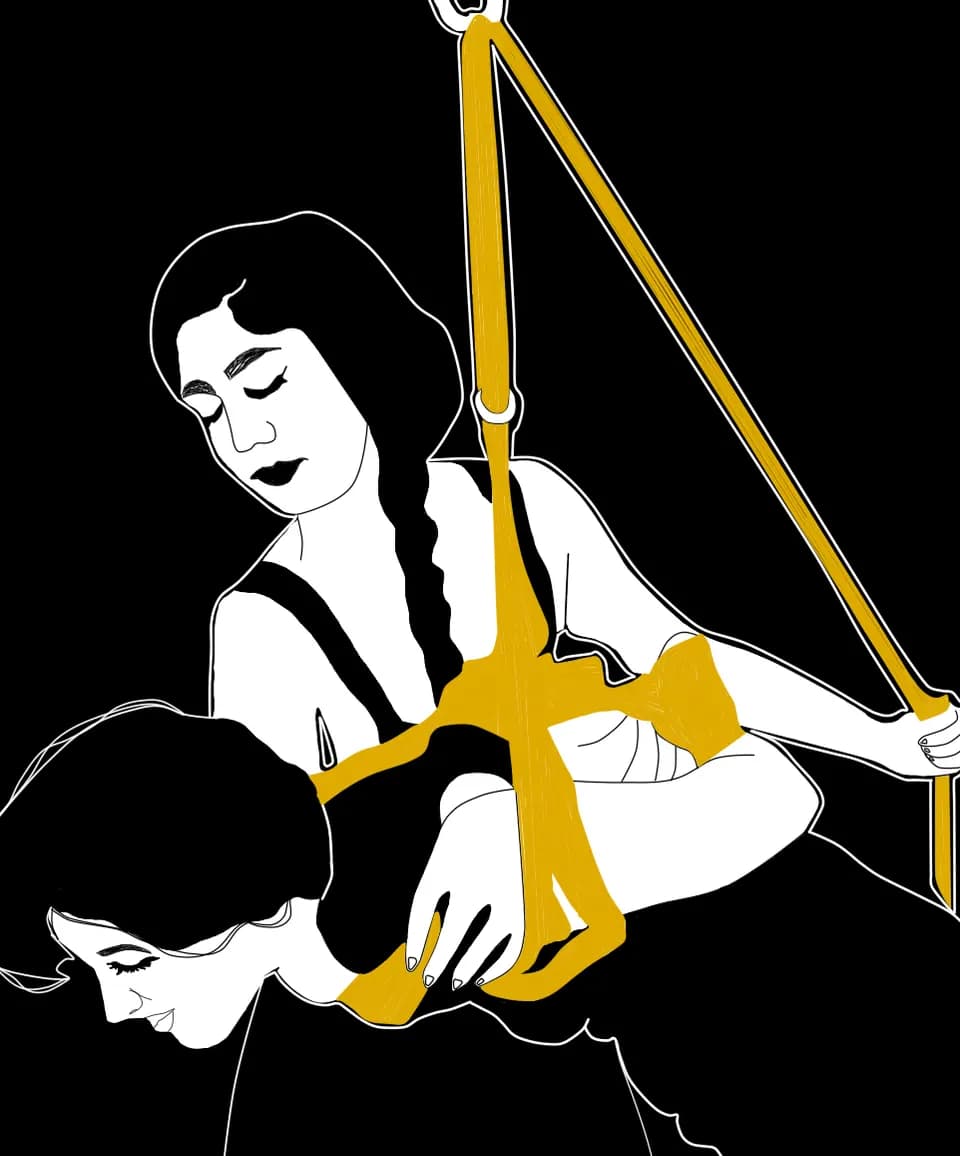
I think it’s imperative to understand that box ties got their reputation for being dangerous ties at a time when lack of robust bottoming education and power-laden interpersonal dynamics fanned the flames of risk. Since then we have collectively levelled-up our understanding of nerve anatomy and best practices for wrap placement. We’ve started teaching communication patterns that encourage early sharing of warning signs and appropriate adjustments. This has fundamentally changed the nature of how risky box ties are. The single most important factor in whether or not a box tie will cause an injury is a bottom’s ability to identify sensations in their body and communicate them effectively, followed by a swift and gracious reaction from their rigger.
Stemmed vs stemless box ties
As shibari education has become more widespread in the last decade, we’ve seen a proliferation of box tie patterns, which generally fall into the category of stemmed or stemless. While many of these espouse to solve for some certain problem or claim some superiority over similar patterns, I think the sheer volume of patterns creates more noise than clarity. Picking the right place to start can be quite confusing. If you’re learning with a local educator, the choice might be made for you. Many teachers will teach the box tie they know best. This works for some people and doesn’t for others!
Nowadays when I teach box tie workshops, I start by talking about shoulder anatomy and the internal rotation necessary to put your arms behind your back. We build up from the anatomical box and see what arises. I’ve worked with so many bottoms who have realized that it wasn’t that their body is bad at being in box ties, but that they had just been put in the wrong box.
I’ve worked with so many bottoms who have realized that it wasn’t that their body is bad at being in box ties, but that they had just been put in the wrong box.
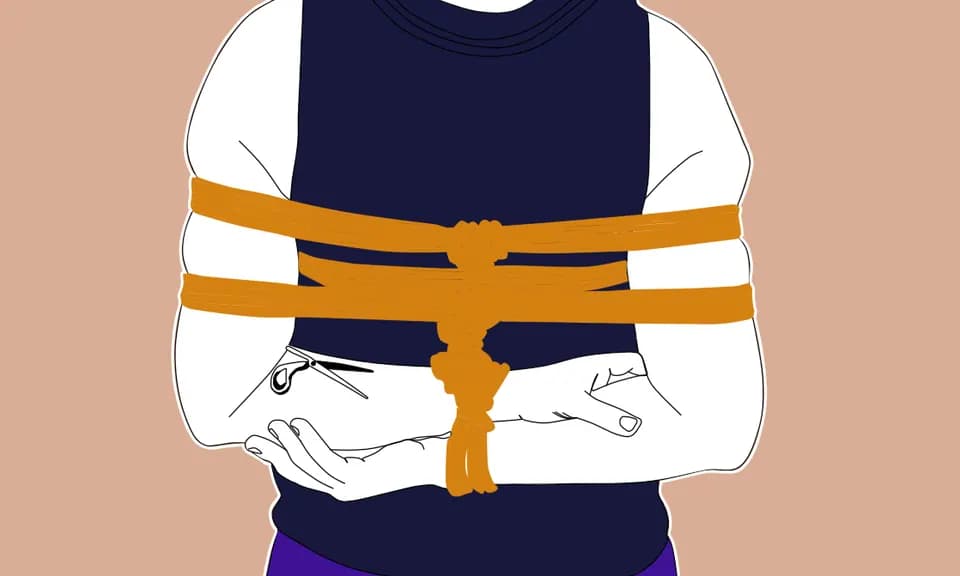
The journey to your best box tie is often more nerdy than hot. It can involve deep diving into body mechanics, precise tension management, historical context and stylistic lineages, and more. Just because it’s not easy immediately doesn’t mean it’s not available to you, if you want to pursue it!
But I don’t want to throw you in the deep end when you’re just trying to get tied up like a damsel on a set of railroad tracks. Before you even begin learning box ties for suspension, start with a classic hogtie and see how you do. This strenuous position slightly loads the box tie using the weight of your own ass and mixes in some fun breath play as a way to really test your ability to communicate under stress. Try these two hogtie courses from Gorgone and Kinoko to start exploring the stemmed/stemless distinction while having fun along the way.
Did you have a preference between those two box ties? Follow that preference down the rabbit hole till you reach a dead end. And when you do, turn around and check out these three courses by three different instructors – (yours truly) fuoco, Fred Hatt, and Gorgone – who are all ready to nerd out with you.
Many of our box tie variations do not claim to fit neatly into one lineage or another, but rather are born out of a desire to solve a particular body puzzle.
Now here’s where the rubber meets the road in your box tie journey. It’s a journey of trial and error, modification, and adaptation. Thoughtful creative liberties are key here. You’ll see in our box tie category that we have lots of harnesses that reflect different needs, approaches, and ways of making them your own. Many of our box tie variations do not claim to fit neatly into one lineage or another, but rather are born out of a desire to solve a particular body puzzle. Try them all, or better yet, understand that the existence of the whole collection conveys permission for you to do your own problem solving!
Thoughtful box tie substitutions
If a box tie just isn’t for you, I celebrate that decision! Let’s talk about what you can substitute. Just because something can be loaded front, side and back, doesn’t mean it will easily stand in as a substitute in a sequence built for a box tie.
- Arms-free chest harnesses are great options if rope on the arms is outside of your risk profile entirely. However, leaving your arms out completely means your ribs will be taking all of the load, and that’s no easy feat. Also consider that transitions between front, side, and back might not translate so easily to a chest harness, as these harnesses generally sit closer to the body all around during suspension, making it difficult to attach new suspension lines when the harness is under load.
- Tengus are my personal favorite substitution for a box tie. I enjoy that the chest still feels exposed and vulnerable. The form lends itself well to top wraps that include the arms, taking load off of the ribs while avoiding the part of the arm most vulnerable to nerve issues. (Some bottoms will experience nerve symptoms here just from the elbow being tightly bent. If you’re feeling symptoms that only ease as the arms come untied, that is a good signal that something internal and mechanical is impacting the nerve, rather than pressure directly from rope. If this applies to you, tengus might not be an ideal substitute.) Tengus also tend not to have as much downward anchoring, so proper tension is key here, especially in upright positions where you might find that this box tie substitute is prone to slippage.
- Arms-front harnesses are a cozy box tie alternative. With the arms tied in, there are nooks and crannies that help make possible new upline attachments under load. You might prefer the energetic experience of being curled inward, able to give yourself a hug as you process other intense sensations. While rope crosses the arms relatively near to the elbow in many of these patterns, it typically doesn’t exert high amounts of pressure on the specific spots of the arms that are most nervy. With more mass tied in the front of the body and the flexion of the spine more exaggerated than in box tie, you’ll find that substituting this harness in place of a box tie renders quite different shapes – I encourage you to find creative opportunities in that! What tweaks to a sequence do you need to make to arrive in positions that look and feel as you want them to?
Ticking the right boxes
There are a lot of valid reasons to ditch box ties. Grumpy shoulders that don’t like the position and nerviness that leads to more anxiety than hotness are just a couple. You might also be energetically averse to the position. In her course 'You Know I’m Black, Right?', Ms Reemah shares that many Black bottoms she ties associate that position with policing and arrest, with a particularly sinister racist context in the United States.
Similarly, there are also a lot of valid reasons to want to be in a box tie. I struggle in just about every box tie I’m suspended from, and yet I love the feeling of my arms being drawn into place and the first moment of the wrist cuff going on. There’s something about a box tie that makes a rope session feel complete to me. My goal here is not to be a box tie pusher; it’s to push back on what I see as some box tie fearmongering that has become commonplace in the last decade.
My goal here is not to be a box tie pusher; it’s to push back on what I see as some box tie fearmongering that has become commonplace in the last decade.
At risk of sounding snarky, I see many riggers who like to warn about the dangers of box ties who have not yet invested the time and learning necessary to skillfully and safely tie box ties. It can be face-saving to moralize about an anti-box tie position rather than to offer an honest self-assessment that acknowledges room for growth. Consider that a rigger who has warned you about the dangers of being in a box tie might just be unwittingly warning you about the dangers of their box tie.
If you want to be in a box, I see you and celebrate you too. Finding the right box tie for you can be a long, super nerdy, very experimental, and really rewarding journey that I hope you feel a bit more equipped to go on now.